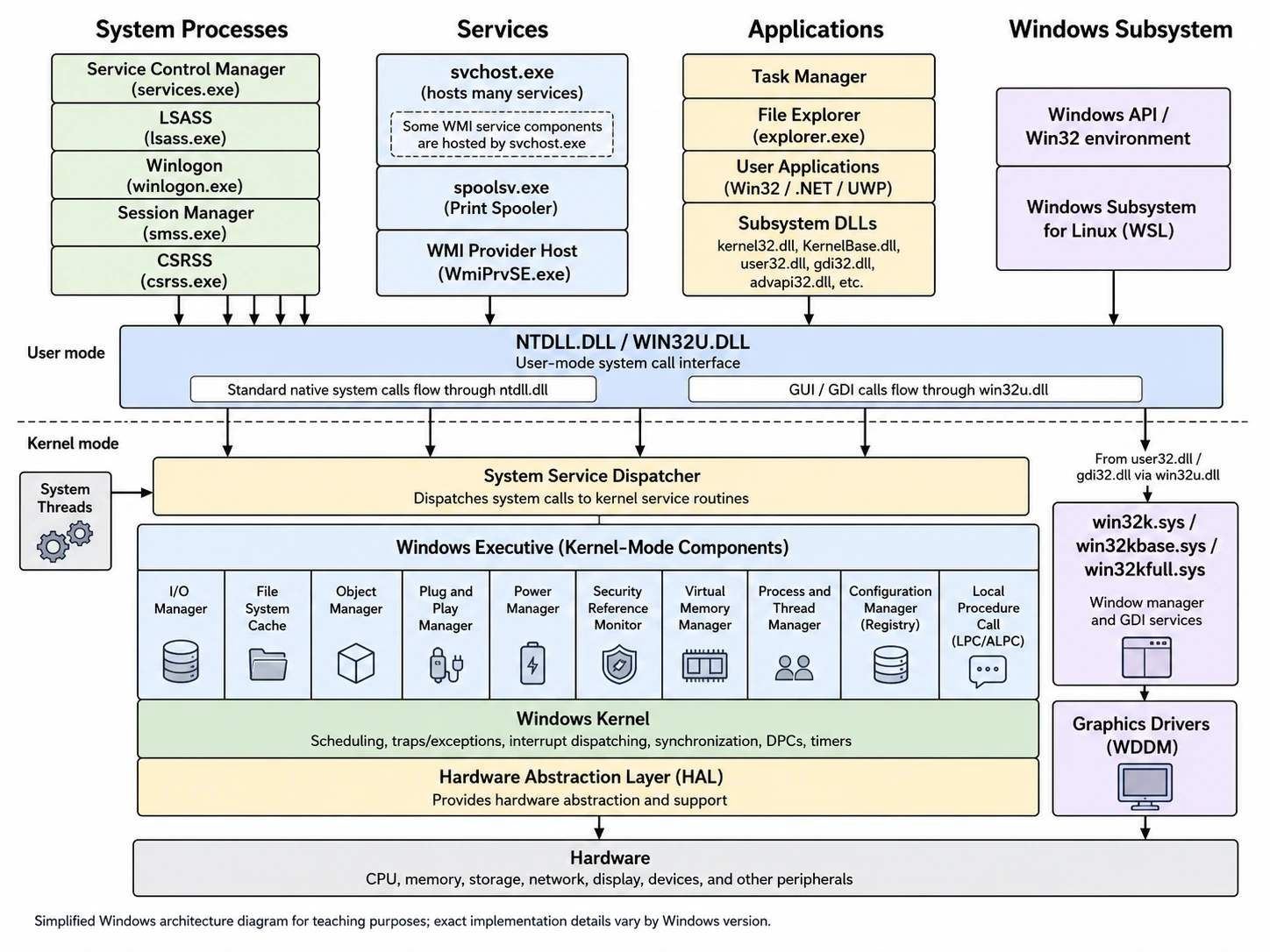
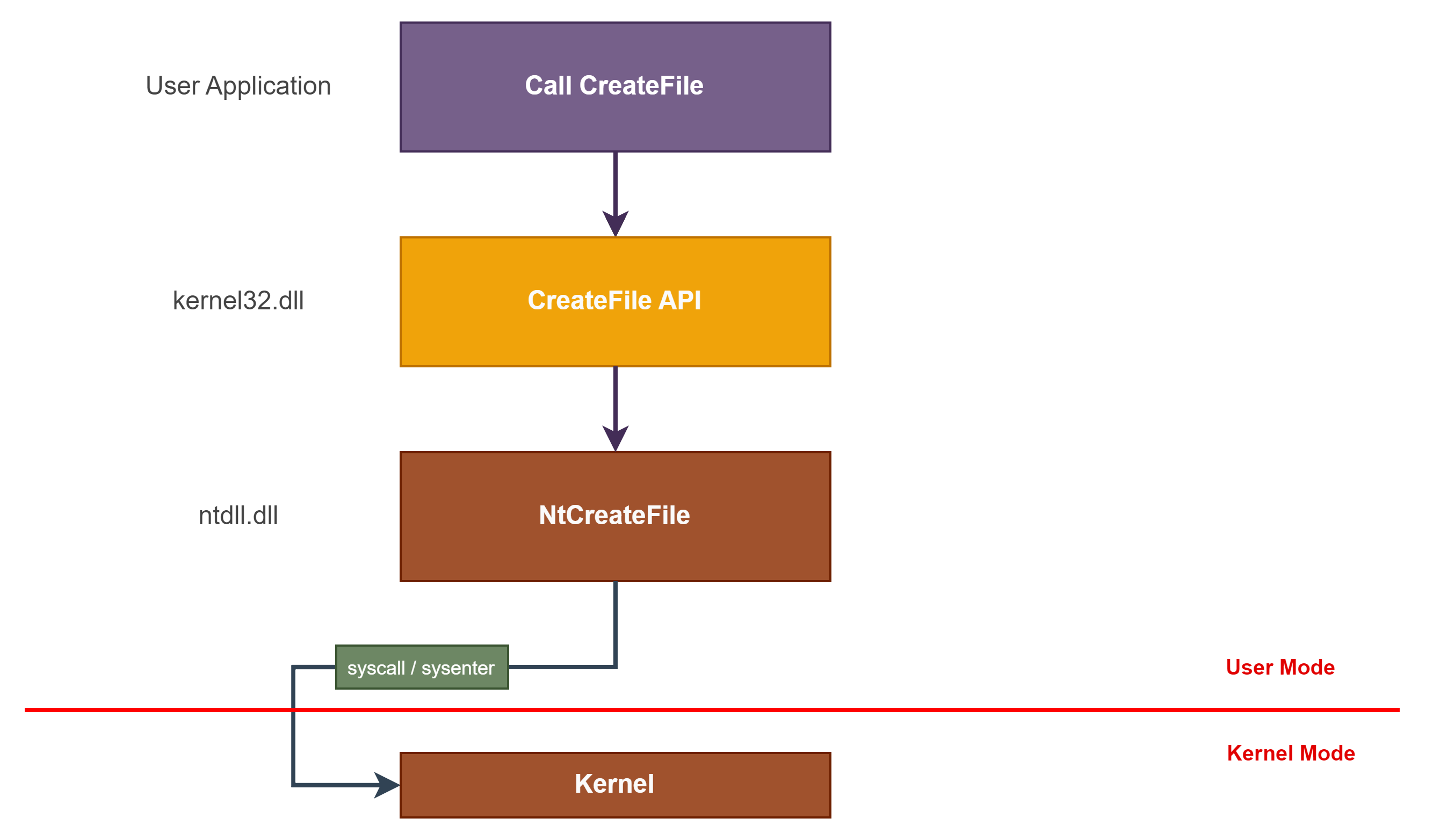
Most programs run in user mode, while the Windows kernel and many components run in kernel mode.
Because of this, programs running in user mode cannot perform sensitive operations such as creating processes, allocating memory, accessing files or interacting with the hardware.
That is what the Windows API is for
NTDLL.dll
It acts as the intermediary between user mode and kernel mode. For example:
- NtCreateFile
- NtCreateThreadEx
- RtlInitUnicodeString
A program can call ntdll.dll directly
Security Principals, Users, Groups, SIDs
Internally, Windows identifies principals (Administrator, computers…) with unique identifiers
- S-1-1-0: Everyone
- S-1-5-18: Local System
- S-1-5-32-544: Built-in Administrators group
- S-1-5-32-545: Built-in Users group
E.g. S-1-5-21-3623811015-3361044348-30300820-1001